192.168.0.1 Login – Access Your Router Settings
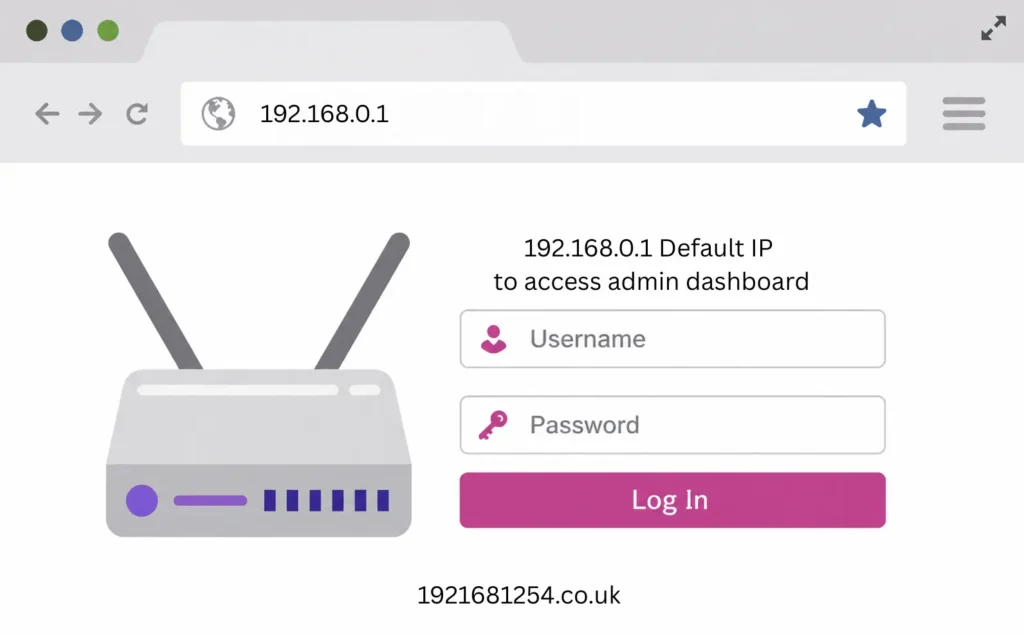
If your router uses 192.168.0.1 as its default gateway, this is the address you will use to access the administrator panel. From there, you can manage your wireless network, update security settings, configure internet options, and monitor every device connected to your home network.
Unlike public websites, 192.168.0.1 works only within your local network. It doesn’t require an internet connection, but your device must be connected to the router by Wi-Fi or Ethernet before the login page can be reached. This guide is all about how to access your router safely and what to do if the login page won’t open.
192.168.0.1 IP Address
To enter your router user page, click the blue button or type 192.168.0.1 into the address bar of your web browser.
192.168.0.1 Login Details
|
Router Login Details |
Information |
|---|---|
|
Default Login Address |
192.168.0.1 |
|
Login URL |
http://192.168.0.1 |
|
IP Version |
Private IPv4 Address |
|
Used For |
Router Administration |
|
Works On |
Windows, macOS, Linux, Android, iPhone & iPad |
|
Connection Required |
Wi-Fi or Ethernet |
|
Common Router Brands |
Netgear, D-Link, Arris, Motorola, Belkin, SMC |
|
Main Features |
Wi-Fi Settings, Firmware Updates, Connected Devices, Guest Network, Security |
How to Log In to 192.168.0.1
Accessing your router takes less than a minute if your device is connected to the correct network.
Connect to the Router
Before opening the login page, ensure your device is connected to the router. You can connect via any of the below:
- Wi-Fi
- Ethernet cable
Make sure you’re connected to another wireless network, public hotspot, or mobile data; otherwise, 192.168.0.1 won’t be accessible.
Open Your Browser
Go to any web browser that is installed on your device, such as Google Chrome, Microsoft Edge etc.
Enter the Login Address
In the browser address bar type http://192.168.0.1 and click on Enter.
Avoid searching for:
- 192 l.168.0.1
- 19 2.168 0.1
- 192.168.o.1
Enter Router Admin Details
After entering the IP, the router’s login page will appear. Here you have to put your
- Admin username and password
Press login, and the router panel will pop up where you can configure your network.
What Is 192.168.0.1?
Unlike 192.168.1.1, which has become the best-known router login address, 192.168.0.1 is particularly common on consumer networking equipment designed for straightforward home installation.
Like all addresses beginning with 192.168, it belongs to the private IPv4 address range reserved for local networks. These addresses aren’t visible on the public internet and can only be reached by devices connected to the same router.
Default Username and Password for 192.168.0.1
Every router manufacturer has its own administrator credentials.
Older devices often use generic login details, while newer models generate a unique password during manufacturing.
|
Manufacturer |
Default Username |
Default Password |
|
Netgear |
admin |
password |
|
D-Link |
admin |
admin |
|
Belkin |
admin |
admin or blank |
|
Motorola |
admin |
motorola or printed label |
|
Arris |
admin |
password or printed label |
|
SMC |
admin |
smcadmin |
Important Note: Multiple failed attempts may lock access to your router’s panel for some time. If the default credentials do not work, check the sticker on the backside of the router or contact your ISP.
Why Your Router May Open Routerlogin.net Instead
If you are a Netgear user, then this behaviour is most common on it.
Instead of a numerical IP address, it has introduced local web addresses such as routerlogin.net and routerlogin.com. You can access the same administration interface if you’re connected to the local network.
If those domains fail to load, entering http://192.168.0.1 manually is often the quickest way to regain access.
192.168.0.1 Login Not Working?
If you can’t open 192.168.0.1, don’t worry. Most login problems are caused by incorrect network connections, typing mistakes or router configuration changes rather than hardware faults. Below can be the reasons:
Check That Your Device Is Connected to the Correct Router
Confirm You’ve Entered the Correct Address
Most of the users make the most common mistakes, which include:
- 192 l.168.0.1
- 19 2.168 0.1
- 192.168.o.1
- 192.168.01
- 19216801
- http//192.168.0.1
- https://192.168.0.1
- www.192.168.0.1
If you are entering these typo variations the browser won’t recognise them as valid router addresses.
Routerlogin.net Isn’t Opening Either
Some Netgear routers support both 192.168.0.1 and routerlogin.net. If neither address works, the problem is usually unrelated to the website itself. Possible causes include:
- The router has been assigned a different LAN IP address.
- Your computer isn’t connected to the router.
- Browser cache is causing an old page to load.
- The router hasn’t finished starting up after a restart.
- The router firmware isn’t responding correctly.
Restart the router, reconnect to the network and try again after a minute or two.
The Login Page Keeps Refreshing
If the login page appears but keeps reloading, the issue is usually related to the browser or router session. Follow these steps:
- Clear your browser cache.
- Open the page in an incognito or private window.
- Restart the browser.
- Try another device.
- Restart the router.
If the problem only affects one browser, an extension or cached session may be interfering with the login page.
Incorrect Administrator Password?
If the administrator password has been changed and you no longer know it, check the label attached to the router before considering a factory reset.
Security Tips After Logging In
Once you’ve successfully signed in to 192.168.0.1, it is worth reviewing a few security settings.
Change the Administrator Password
Do not continue using the default administrator password if it is still active. Choose a unique password that is different from your Wi-Fi password.
Update the Router Firmware
Updated firmware can help you:
- Security improvements
- Bug fixes
- Better compatibility
- Stability enhancements
Review Connected Devices
Open the Connected Devices or Device List page occasionally.
If you notice an unfamiliar device, change your Wi-Fi password and reconnect only trusted devices.
Disable Features You Don’t Use
IRouter includes options such as the following:
- Remote management
- WPS
- UPnP
- Unused guest networks
Consider disabling them unless you genuinely need those features.
A simpler configuration is often a more secure one.
Frequently Asked Questions
Final Thoughts
192.168.0.1 remains one of the most widely used router login addresses, particularly on consumer routers, cable gateways and broadband equipment supplied by internet providers. Once you gain access to the administration panel, you can manage every important aspect of your home network, from wireless security and firmware updates to connected devices and internet settings.
If the login page doesn’t open straight away, start with the basics. Confirm that your device is connected to the correct network, enter the IP address accurately, and check whether your router uses 192.168.0.1 or another default gateway. In many cases, these simple checks resolve the problem without the need for a factory reset.