192.168.100.1 Login – Access Your Modem or Router Settings
If your modem or router uses 192.168.100.1, this address provides access to its local administration interface. From there, you can view your internet connection, manage network settings, monitor connected devices and, depending on your equipment, configure wireless options or perform basic troubleshooting.
One thing that makes it different from other addresses is that it is commonly associated with broadband equipment rather than traditional standalone routers. Many fibre gateways, cable modems, GPON terminals and ISP-supplied networking devices use this address to provide local access for diagnostics and configuration.
192.168.100.1 Default IP Address
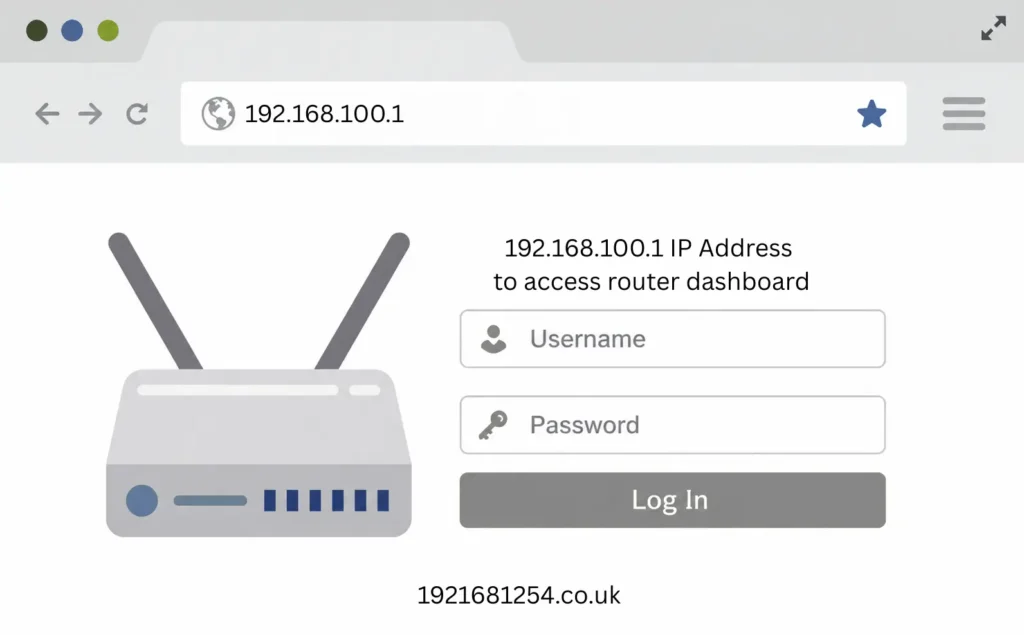
Click on the blue button or type 192.168.100.1 into the address bar to access your admin login page.
Know About 192.168.100.1 Login
|
Router Login Details |
Information |
|---|---|
|
Default Login Address |
192.168.100.1 |
|
Login URL |
http://192.168.100.1 |
|
IP Type |
Private IPv4 Address |
|
Common Use |
Modem & Router Administration |
|
Often Found On |
Fibre ONTs, Cable Modems, Broadband Gateways and ISP Devices |
|
Works On |
Windows, macOS, Linux, Android, iPhone & iPad |
|
Internet Required |
No |
|
Main Features |
Connection Status, Broadband Diagnostics, Network Settings, Firmware, Device Information |
How to Log In to 192.168.100.1
Sign in to that private IP within a few minutes by following the steps below.
Connect to Your Network
Connect your computer or mobile device to the modem or router using Wi-Fi or an Ethernet cable.
For configuration changes, a wired Ethernet connection is usually the more stable option.
Open a Web Browser
Open your preferred web browser. There is no need to install additional software.
Enter the Login Address
Now type 192.168.100.1 into the browser’s address bar.
Sign In
If the address is correct, you will be prompted to enter the administrator username and password.
Once logged in, you will be able to access the management interface for your device.
What Is 192.168.100.1?
Unlike some private IP addresses that are almost exclusively used for wireless routers, 192.168.100.1 is often associated with broadband infrastructure.
Many cable modems, fibre gateways and integrated modem-router devices reserve this address for local management. In some cases, it’s always available, even when the internet connection itself is offline, allowing users to diagnose broadband issues without needing an active internet connection.
Rather than focusing purely on Wi-Fi settings, devices using 192.168.100.1 frequently provide information about the connection between your home network and your internet service provider.
Depending on your equipment, you may find details such as:
- Connection uptime
- WAN status
- Optical signal information
- DOCSIS channel status
- Upstream and downstream power levels
- Event logs
- Firmware version
- Device serial number
- Broadband diagnostics
This makes 192.168.100.1 particularly useful when troubleshooting internet connectivity rather than simply changing wireless settings.
Why Is 192.168.100.1 Different from Other Router Login Addresses?
Most router login pages focus on managing your home Wi-Fi network. However, 192.168.100.1 often serves a broader purpose.
Many broadband devices use it to display technical information about the internet connection itself, making it especially valuable when diagnosing network faults.
For example, you may be able to:
- Check whether your modem is synchronised with the broadband network.
- View fibre or cable connection status.
- Review signal strength and channel information.
- Confirm firmware versions.
- Restart network services.
- Monitor system logs.
- Verify hardware status.
These features are less common on standard home routers that primarily focus on wireless networking.
Default Login Credentials
Administrator usernames and passwords vary between manufacturers and internet service providers.
Older equipment may use generic credentials, while modern broadband gateways often include unique login details printed on the device label. You can find these credentials on:
- The label underneath the modem or router.
- The quick start guide supplied with your equipment.
- Documentation from your broadband provider.
If the credentials have been changed previously, only the updated administrator password will provide access.
Can’t Access 192.168.100.1? Double-Check the Login Address
A single typing mistake is enough to prevent the login page from opening. Most people make these common mistakes:
- 1921681001
- 192.168.l00.1
- 192.168.100.l
- 192.168.100
- 192.168.10.01
- http//192.168.100.1
- https://192.168.100.1
It would not open the administration page unless the address were entered correctly.
Browser Shows “This Site Can’t Be Reached”
This message usually means your browser cannot communicate with the device. Check for the following reasons and make sure you’re not making these mistakes.
|
Possible Cause |
Recommended Solution |
|---|---|
|
Wrong management IP |
Check the Default Gateway on your device. |
|
Connected to another router |
Connect directly to the modem or gateway. |
|
Loose Ethernet cable |
Reconnect or replace the cable. |
|
Browser problem |
Try another browser or open a Private window. |
|
VPN enabled |
Disconnect the VPN temporarily. |
|
Device still starting |
Wait two or three minutes before trying again. |
Why Does 192.168.100.1 Open Even When the Internet Is Down?
This is one of the biggest differences between 192.168.100.1 and many other router login addresses.
The management interface is stored inside the modem or gateway itself, not on the internet. That means you can often access pages showing the following:
- Broadband status
- Signal information
- Event logs
- Device information
- Firmware version
Even if websites won’t load.
This is extremely useful because it helps you determine whether the problem is inside your home network or with your broadband provider.
Understanding DOCSIS Signal Information
If you are using a cable broadband connection, your modem may display DOCSIS signal statistics.
These figures help determine whether your modem is communicating properly with your internet provider. It will show you information such as:
- Downstream power
- Upstream power
- Signal-to-noise ratio (SNR)
- Channel ID
- Frequency
- Channel lock status
While most users don’t need to adjust these values, they can provide valuable information if you’re experiencing slow speeds, frequent disconnections or unstable service.
GPON and Fibre Status Pages
On fibre broadband equipment, 192.168.100.1 may display GPON or optical network information instead of DOCSIS statistics. This can include:
- Optical signal levels
- Fibre link status
- Registration status
- Optical serial number
- ONU or ONT information
- Connection uptime
These pages are designed primarily for diagnostics and often require no user configuration.
Frequently Asked Questions
Final Thoughts
192.168.100.1 is linked to the equipment that connects your home directly to your broadband provider. That makes it more than just a login page; it can also be a valuable diagnostic tool when you’re trying to understand connection problems, check signal quality or verify the status of your internet service.
Whether your device is a cable modem, fibre gateway or integrated broadband hub, learning how to access 192.168.100.1 gives you greater visibility into your network and can help you identify issues before contacting technical support.