
192.168.1.1 Login – Access Your Router Admin Panel
If you’re trying to open 192.168.1.1, you’re most likely looking for your router’s login page. This private IP address is used by millions of home and business routers as the default gateway, allowing you to access the administration panel and manage your network.
After signing in, you can change your Wi-Fi password, rename your wireless network, update security settings, configure parental controls, manage connected devices and perform many other networking tasks without needing any additional software.
This guide explains how to access 192.168.1.1, which routers use it, how to solve common login problems and what you can do once you’ve signed in.
192.168.1.1 Default IP Address
Press the button below to open your router’s default IP address, or continue reading for step-by-step login instructions, troubleshooting solutions, and answers to common router login problems.
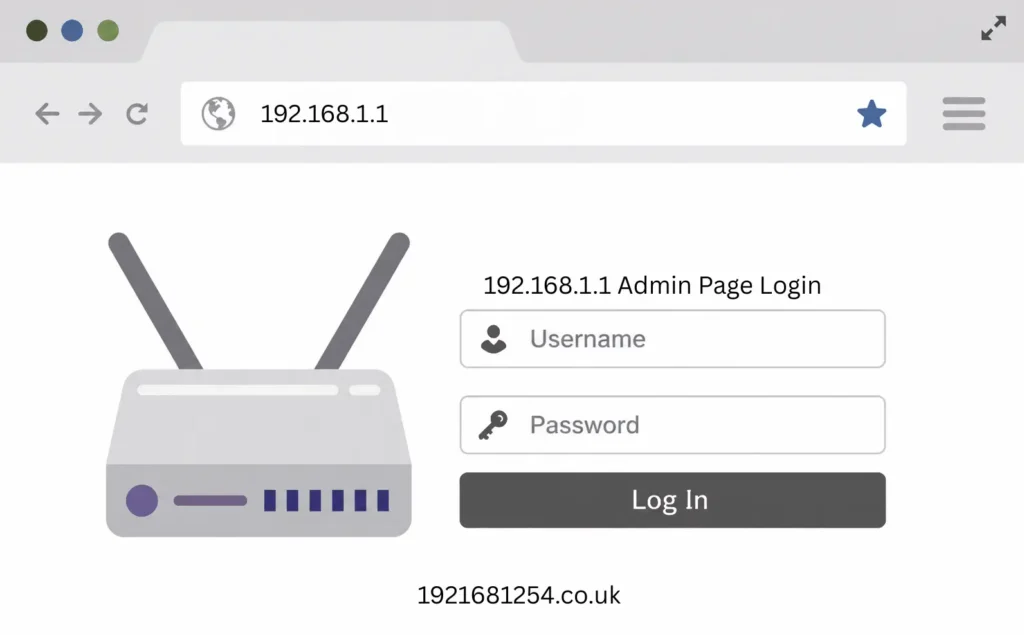
About 192.168.1.1 Login
|
Router Login Details |
Information |
|---|---|
|
Default Login Address |
192.168.1.1 |
|
Login URL |
http://192.168.1.1 |
|
IP Type |
Private IPv4 Address |
|
Used For |
Router Administration |
|
Connection Required |
Wi-Fi or Ethernet |
|
Supported Devices |
Windows, macOS, Linux, Android, iPhone & iPad |
|
Common Brands |
TP-Link, ASUS, D-Link, Tenda, Huawei, Zyxel, Netgear |
|
Main Functions |
Wi-Fi Settings, Security, Firmware, Connected Devices, Guest Network |
How to Log In to 192.168.1.1
Logging in is straightforward, but many failed attempts happen because users enter the address incorrectly or aren’t connected to the router. Follow these steps.
Step 1 – Connect to Your Router
Make sure your computer, phone or tablet is connected to the router you want to manage.
You can connect using:
- Wi-Fi
- Ethernet cable
If you’re connected to another wireless network or using mobile data, the login page won’t open.
Step 2 – Open Your Browser
Any modern browser will work, such as Google Chrome, Microsoft Edge, Mozilla Firefox, Safari, Opera, Brave etc.
Step 3 – Enter the Login Address
Type the following into the address bar: http://192.168.1.1
Do not type it into Google Search.
Many people search for the following:
- 19216811
- 192.168.l.l
- 192 l.168.1.1
- 192.168.1.1 login
These searches are common, but your browser must receive the correct IP address before it can open the router.
Step 4 – Sign In
Your router’s login page should appear.
- Enter the administrator username and password.
Click on ‘login’ to reach the router dashboard where you can manage your network settings.
What Is 192.168.1.1?
Unlike a normal website, 192.168.1.1 isn’t hosted on the internet. It’s a private IPv4 address reserved for local area networks (LANs). Routers use it as a management address so devices connected to the same network can communicate with the router’s web interface.
Why Is 192.168.1.1 So Popular?
If you’ve owned more than one router, you’ve probably noticed that 192.168.1.1 appears far more often than other default gateway addresses.
There are several reasons for this.
- First, it’s easy to remember. Router manufacturers know that users occasionally need to access their router settings, so a simple and familiar address reduces confusion.
- Secondly, many networking companies adopted 192.168.1.1 years ago, making it an industry convention. As new models were released, manufacturers continued using the same address because customers were already familiar with it.
- Finally, the address sits within the private 192.168.x.x range reserved for internal networking. Since these addresses aren’t routable across the public internet, they’re ideal for managing local devices securely.
Default 192.168.1.1 Username and Password
Every router requires administrator credentials before allowing access to its settings. While many older devices shipped with generic login details, modern routers increasingly use unique passwords printed on the product label.
|
Manufacturer |
Default Username |
Default Password |
|---|---|---|
|
TP-Link |
admin |
admin |
|
ASUS |
admin |
admin |
|
D-Link |
admin |
admin |
|
Tenda |
admin |
admin |
|
Netgear |
admin |
password |
|
Huawei |
admin or telecomadmin |
Printed on router or ISP supplied |
|
Zyxel |
admin |
1234 or printed label |
Tip: If the default credentials don’t work, it’s possible they’ve been changed previously. Check the sticker on the router before considering a factory reset.
Can’t Access 192.168.1.1? Here’s How to Fix It
If 192.168.1.1 doesn’t open, don’t assume your router is faulty. Most login problems are caused by simple issues that can be fixed within a few minutes.
Before resetting your router or contacting your broadband provider, work through the checks below.
1. Make Sure You’re Connected to the Correct Router
The router’s login page only works when your device is connected to that router.
Check that you’re connected through:
- Wi-Fi
- Ethernet cable
If you’re using:
- Mobile data
- A different Wi-Fi network
- A public hotspot
- A work VPN
The login page won’t load because your device isn’t communicating with your router.
2. Enter the Address Correctly
One incorrect character is enough to stop the login page from loading.
The correct address is: http://192.168.1.1
Common typing mistakes include:
- 19216811
- 192.168.l.l
- 192 l.168.1.1
- 192.168.ll
- 192.168.11
- 192.168.1
- http//192.168.1.1
- https://192.168.1.1
- www.192.168.1.1
- 192.168.1.1 login (typed into the address bar)
Many users search for these variations, but your browser only understands the correctly formatted IP address.
3. Use the Browser’s Address Bar, Not a Search Engine
This is probably the most common mistake. Instead of opening the router, users search Google for 192.168.1.1. Google simply returns search results.
To access the router, click the browser’s address bar and enter http://192.168.1.1, then press Enter.
4. Check Whether 192.168.1.1 Is Actually Your Router’s IP Address
Although 192.168.1.1 is one of the world’s most common router IP addresses, not every router uses it. Your router may instead use:
- 192.168.0.1
- 192.168.1.254
- 192.168.100.1
- 192.168.8.1
- 10.0.0.1
If this IP doesn’t respond, check your router’s default gateway before assuming something is wrong.
Why Does 192.168.1.1 Keep Loading Forever?
If the login page never finishes loading, the router is usually responding but cannot complete the request. Possible reasons include:
- Weak Wi-Fi signal
- Temporary router software issue
- Browser extensions interfering with the page
- High network traffic
- Outdated router firmware
Try the following:
- Refresh the page.
- Restart the router.
- Try another browser.
- Connect with an Ethernet cable.
- Disable browser extensions temporarily.
Why Does Chrome Say “This Site Can’t Be Reached”?
This message usually appears when your browser cannot establish communication with the router. These can be the reasons:
|
Cause |
Solution |
|---|---|
|
Wrong IP address |
Check your Default Gateway |
|
Router switched off |
Restart the router |
|
Loose Ethernet cable |
Reconnect the cable |
|
Connected to another network |
Join the correct Wi-Fi |
|
VPN enabled |
Disconnect the VPN temporarily |
|
Browser problem |
Try another browser |
In most cases, the issue is resolved without changing any router settings.
Why Does 192.168.1.1 Redirect Me to Google?
If typing 192.168.1.1 opens Google instead of your router, it’s usually because the address has been entered into the search box rather than the browser’s address bar.
Another possibility is that your browser has automatically converted the text into a search query.
Always click the address bar first, replace any existing text, and type the full IP address exactly as shown.
Browser Shows a Security Warning
You may see messages such as:
- Your connection is not private
- Potential security risk
- Warning: insecure connection
Most home routers use self-signed SSL certificates, which browsers don’t recognise as trusted because they are designed for local network access rather than public websites.
If you are connected to your own router and you have entered the correct local IP address, this warning doesn’t necessarily indicate that your router has been compromised; just click on ‘Advanced’, and you will enter the admin panel.
Forgot Your Router Password?
There are two different passwords people often confuse.
Wi-Fi Password
Used to connect devices to your wireless network.
Administrator Password
Used to sign in to the router through 192.168.1.1.
Changing one doesn’t automatically change the other.
If you have forgotten the administrator password, check the router label or any documentation provided by your internet service provider.
If the password has been changed and you no longer know it, a factory reset may be required.
Expert Advice
Internet access and router access aren’t the same thing.
Even if your broadband connection is down, you can often still open 192.168.1.1 because the login page is hosted on the router itself, not on the internet. If the admin page loads but websites don’t, the issue is likely with your internet connection rather than the router management interface.
Can You Change the Router’s Login Address?
Yes. Many routers allow you to change the default LAN IP address from 192.168.1.1 to another private address.
For example, you could change it to:
- 192.168.0.1
- 192.168.1.254
- 192.168.10.1
- 192.168.100.1
Changing the router’s IP address may be useful if:
- Two routers on the same network use the same gateway.
- You’re creating a separate network segment.
- You’re configuring the router as an access point.
- Your existing network already uses 192.168.1.1.
After changing the address, you’ll need to use the new IP whenever you log in to the router.
Can Two Routers Use 192.168.1.1?
Yes, but not on the same local network. If two routers connected to the same network share the same LAN IP address, an IP address conflict occurs. This can prevent devices from reaching the correct router and may cause connectivity problems.
When installing a second router or configuring a mesh or access point setup, it’s good practice to assign each router a unique LAN IP address to avoid conflicts.
Security Tips for Router Administrators
Once you logged in through 192.168.1.1, taking a few minutes to review your security settings can make your network much harder to compromise.
Here are a few recommendations from my side:
- Replace the default administrator password with a strong, unique password.
- Use WPA3 security if your router supports it, or WPA2-Personal (AES) on older hardware.
- Install firmware updates whenever they’re released by the manufacturer.
- Disable remote management unless you genuinely need to access the router from outside your home.
- Turn off WPS if you never use it.
- Check the list of connected devices regularly and remove anything you don’t recognise.
- Create a separate guest network for visitors rather than sharing your main Wi-Fi password.
These simple steps improve both security and privacy without requiring advanced networking knowledge.
Frequently Asked Questions
Final Thoughts
192.168.1.1 remains the most widely recognised router login address, giving users quick access to the settings that keep a home or office network running smoothly. Whether you’re changing your Wi-Fi password, updating firmware, reviewing connected devices or adjusting wireless security, the router’s administration panel is where those tasks begin.
If 192.168.1.1 doesn’t work, don’t rush to reset your router. In many cases, the issue is as simple as using the wrong gateway address, entering the IP incorrectly, or connecting to the wrong network. A few quick checks can often restore access without losing your existing settings.